
1976 – 2026
50 years
Hisarya National Archaeological Reserve
A heritage that continues to live and inspire.
The past is part of our present and a path to the future.
A heritage that lives on
On 19 November 1976, the ancient city at Hisarya was designated a National Archaeological Reserve. This recognition placed its research and protection at the heart of a lasting commitment to an important record of Roman heritage in what is now Bulgaria.
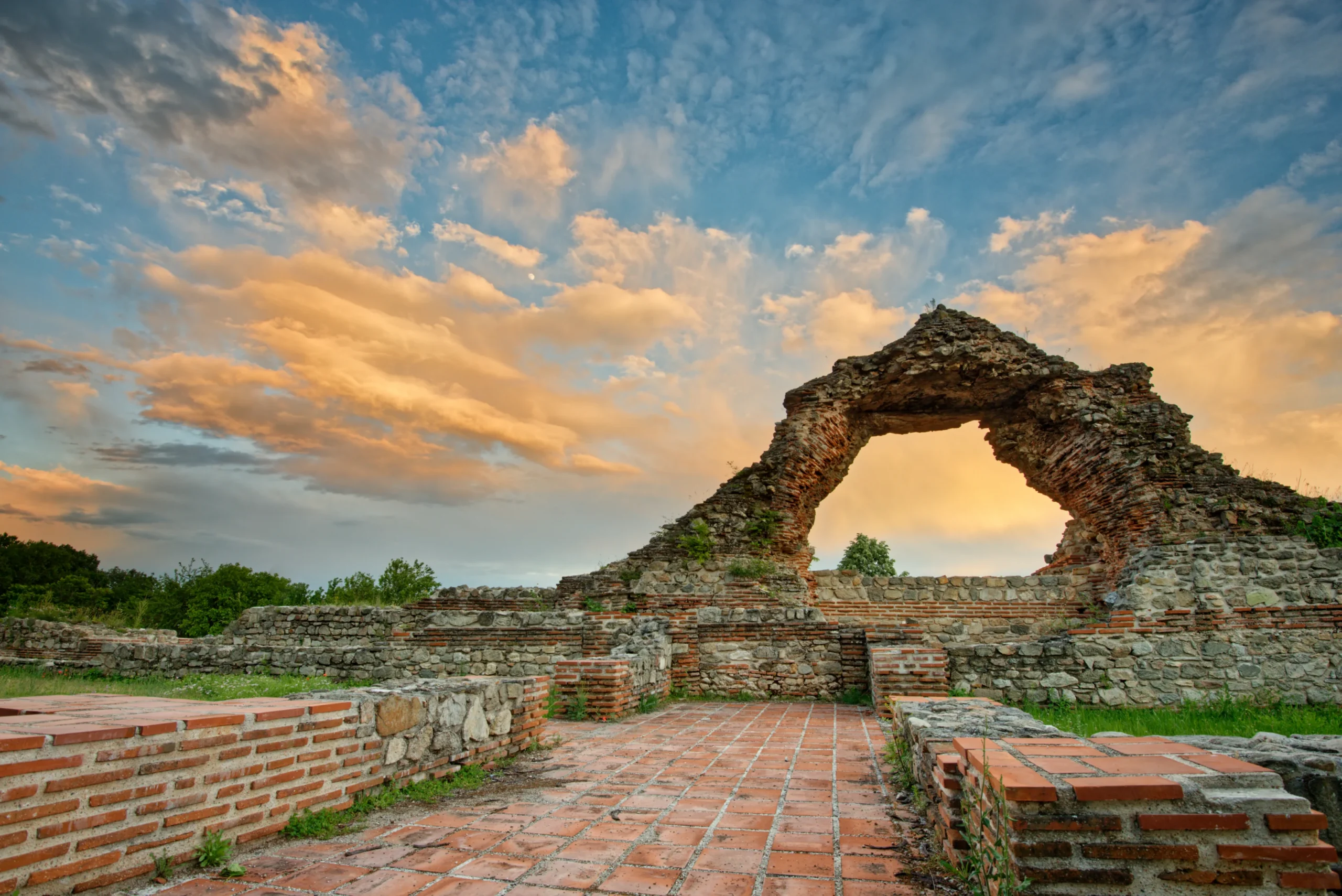
The development of Diocletianopolis is inseparable from its mineral springs. Baths and prominent public buildings grew around them, and the city was fortified under Emperor Diocletian in the late third and early fourth centuries. The surviving remains reveal a place where healing, public life and urban culture were closely connected.
The fiftieth anniversary in 2026 turns attention to the future of this heritage. The Hisarya Archaeological Museum’s Future of the Past project, funded by the Ministry of Culture, brings together research, exhibitions and new ways of engaging audiences. Its purpose is to ensure that the ancient city is preserved, understood, experienced and shared.
Discover the reserve
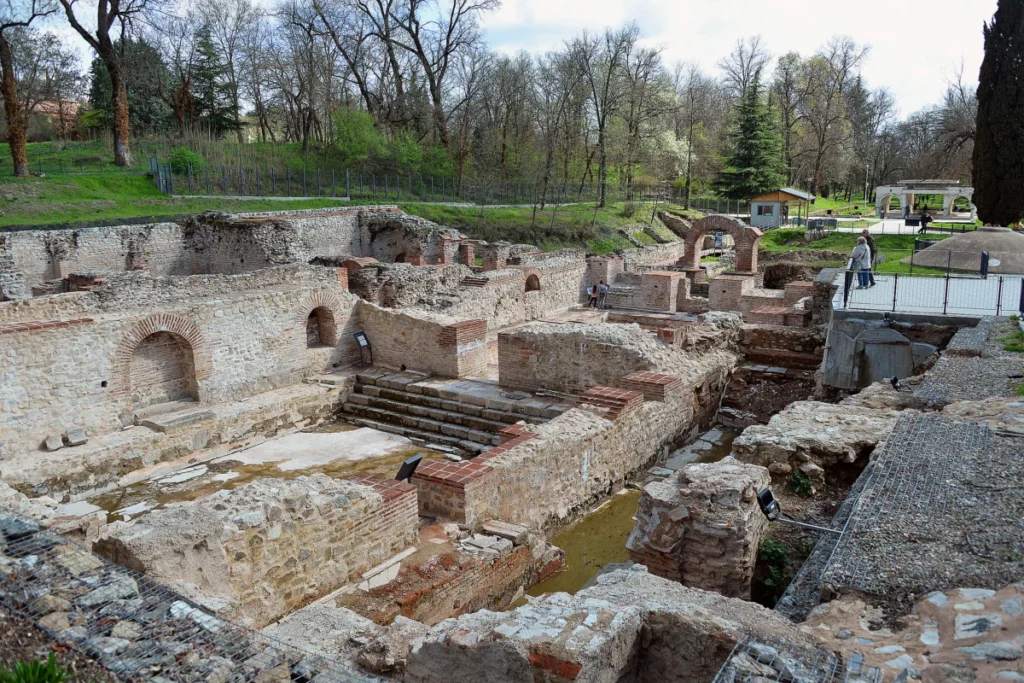
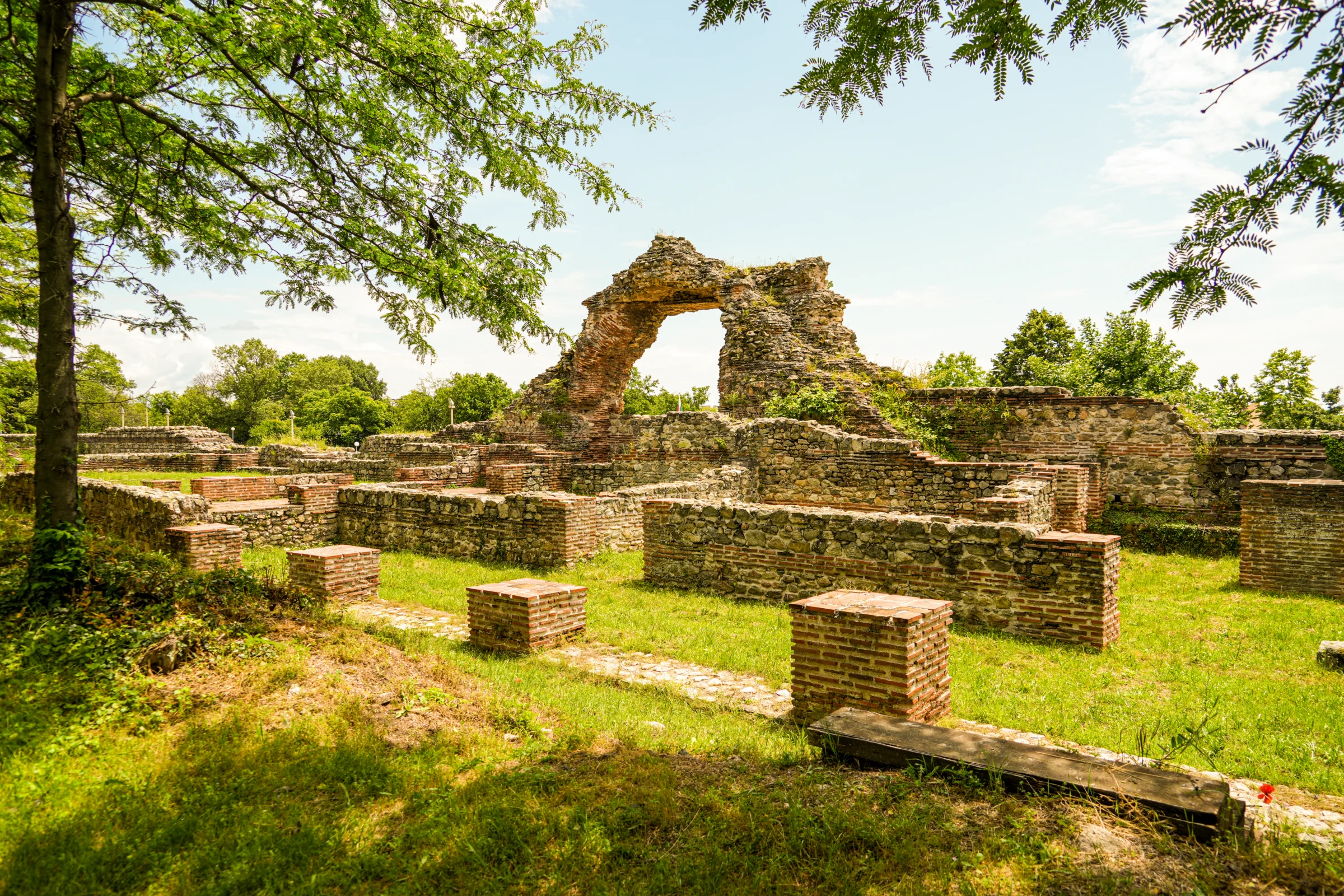
The reserve presents an entire urban ensemble: fortifications, streets, homes and public buildings, Roman baths, an amphitheatre and early Christian basilicas. Walking among them offers an insight into the layout of Diocletianopolis and the lives of its inhabitants.
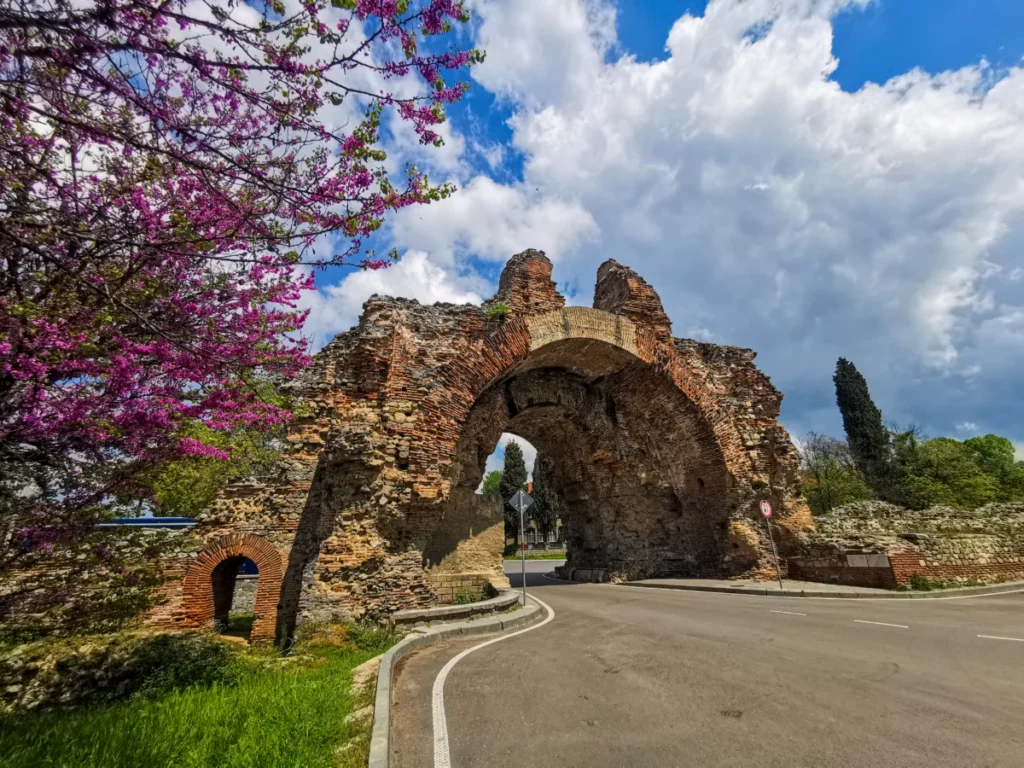
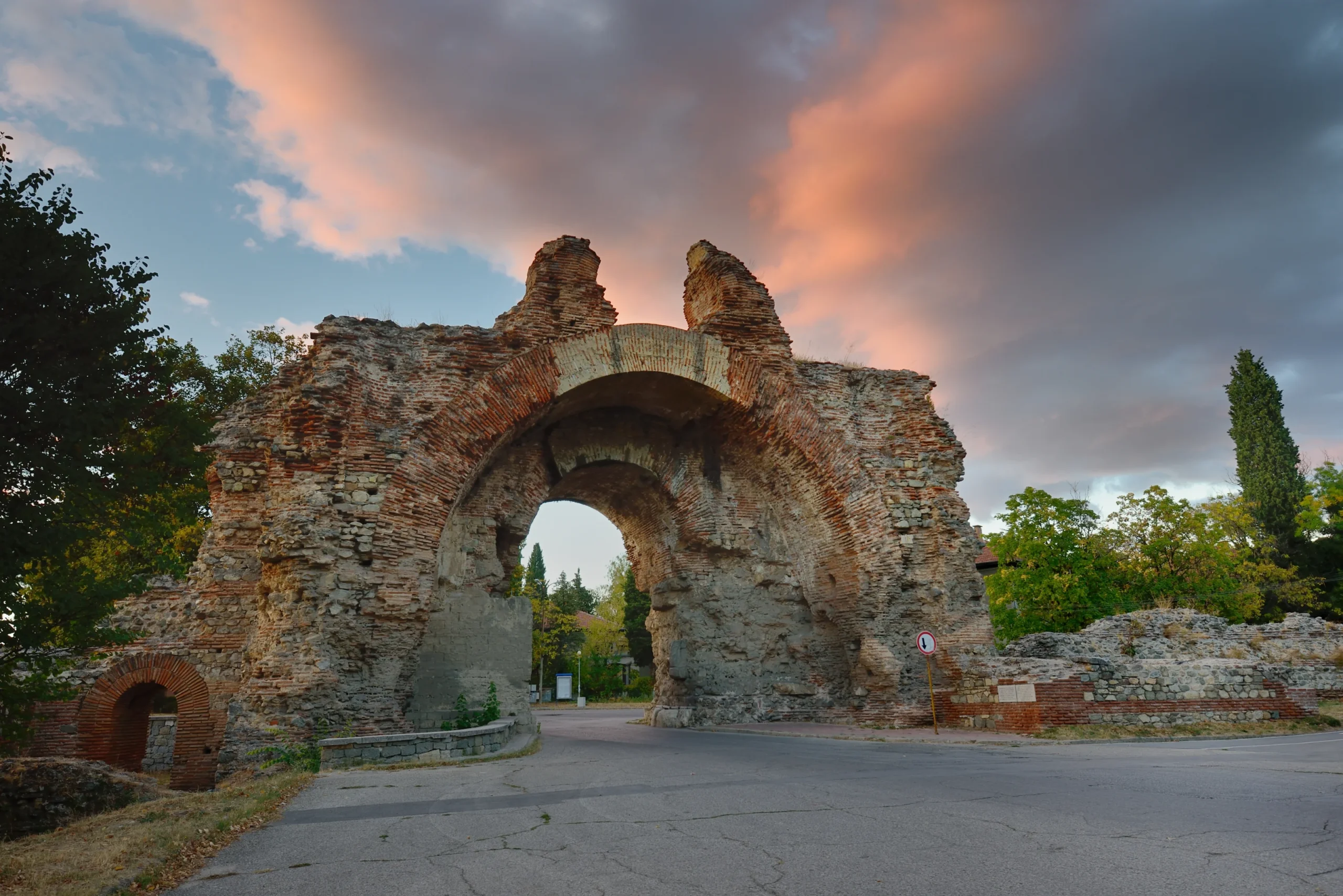
The fortress wall extends for 2,327 metres and is reinforced by 44 towers. Four main gates connected the city to the roads beyond it. The southern gate, known today as The Camels, is one of Hisarya’s recognisable landmarks and a starting point for discovering the ancient city.
In Momina Salza Park, the Roman baths preserve evidence of the use of warm mineral water in antiquity. Construction of the complex probably began in the middle of the second century. Finds from the baths are displayed in the Archaeological Museum, while the Roman family tomb outside the walls adds its floor mosaic and wall paintings to the story. Together, these sites reveal different aspects of the ancient inhabitants’ lives, beliefs and skills.
Five decades
Five decades of history
-
1976
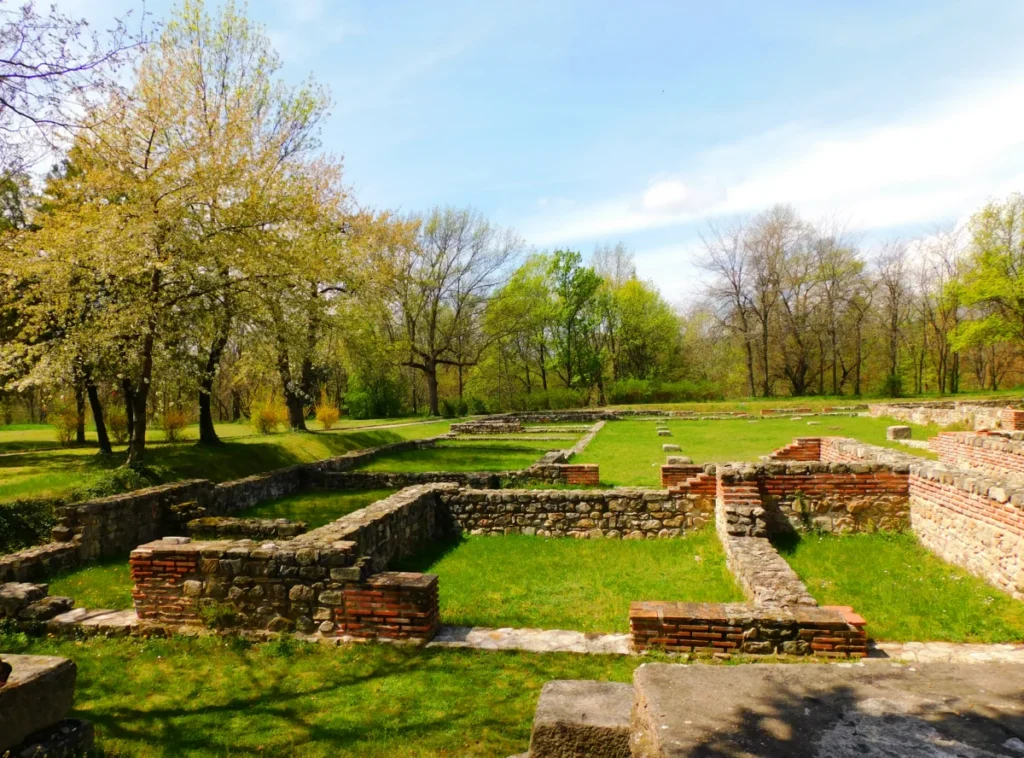
The reserve is established
Diocletianopolis is declared a National Archaeological Reserve, recognising its exceptional historical significance.
-
1980–1990
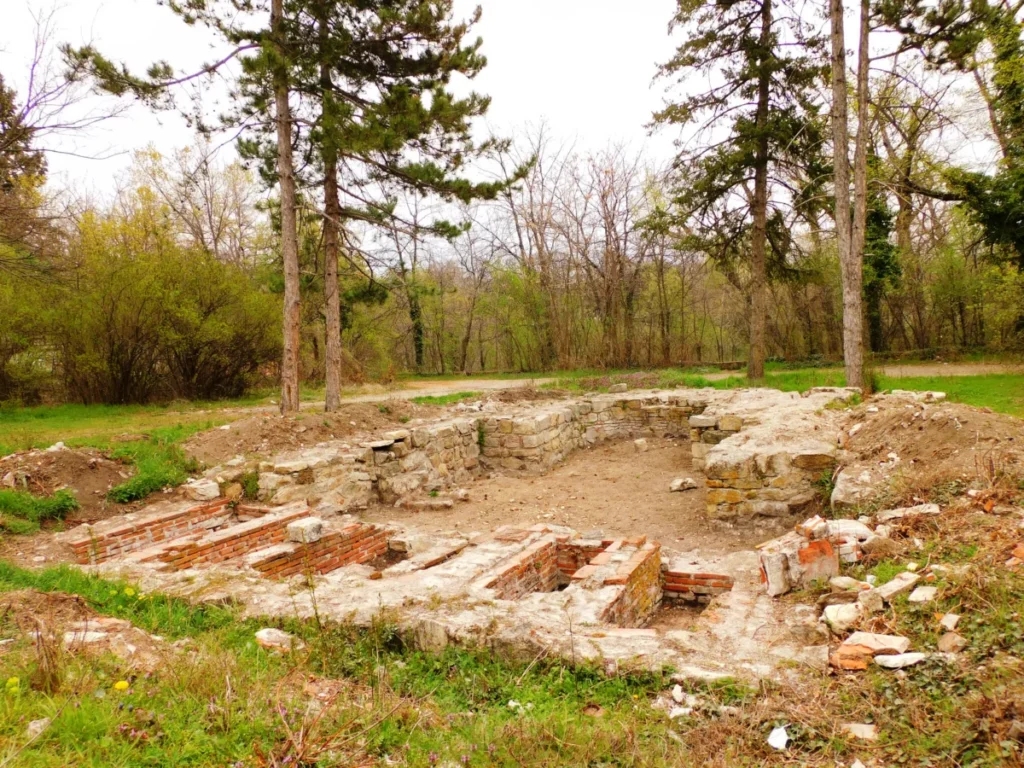
Research and discoveries
Extensive archaeological research reveals new parts of the city and deepens our understanding of its past.
-
2000–2010
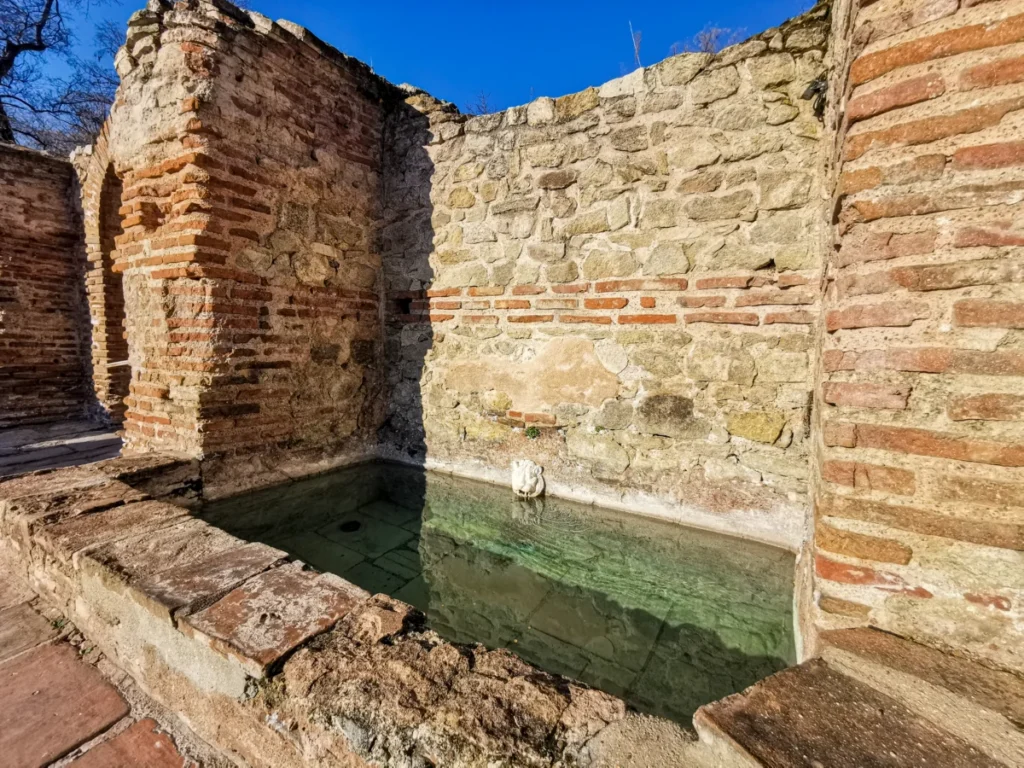
Conservation and public access
Monuments are conserved and restored, gradually making the ancient city an accessible and enriching place for visitors.
-
2010–2026
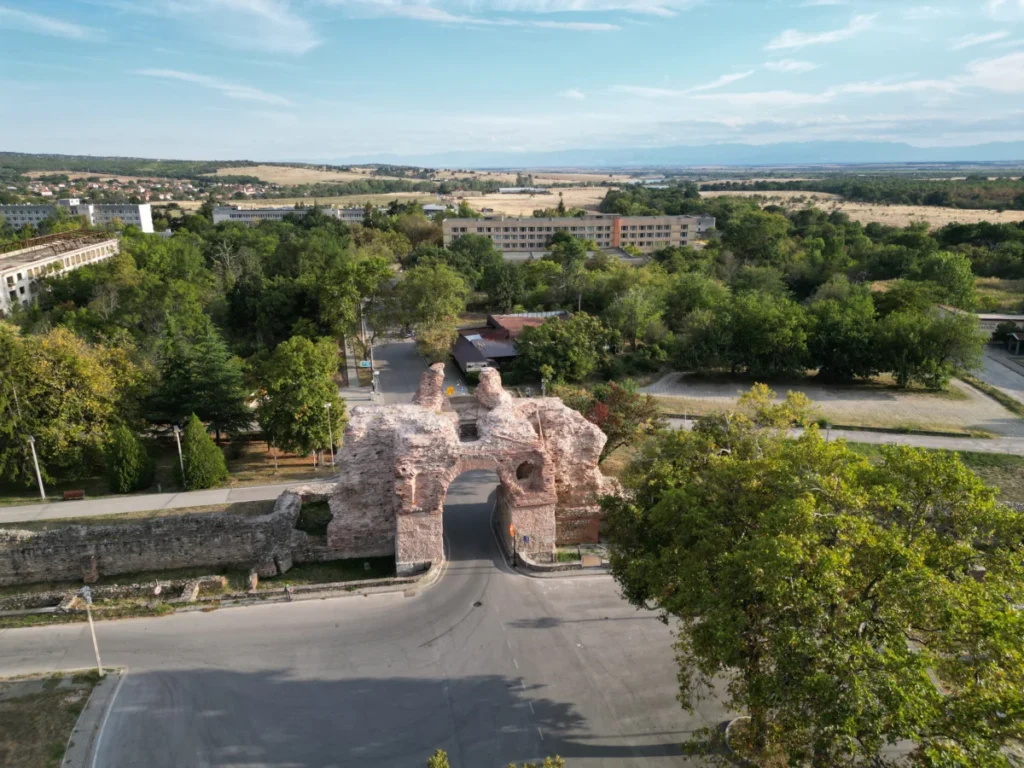
Living heritage today
The reserve welcomes everyone – a place for science, education, cultural encounters and the preservation of historical memory.
Our mission
Values for generations
Preserving heritage
Caring for original masonry, architectural details and finds preserves the evidence through which we understand the ancient city’s history.
Exploring history
Archaeological investigations and scientific exchanges deepen our understanding of the layout, everyday life and culture of Diocletianopolis.
Sharing knowledge
Museum displays, exhibitions and digital storytelling connect objects and monuments with the people who created them.

Inspiring the future
Educational initiatives and the involvement of young volunteers turn an encounter with the past into a personal commitment to its future.
The people behind the reserve
The team behind the heritage
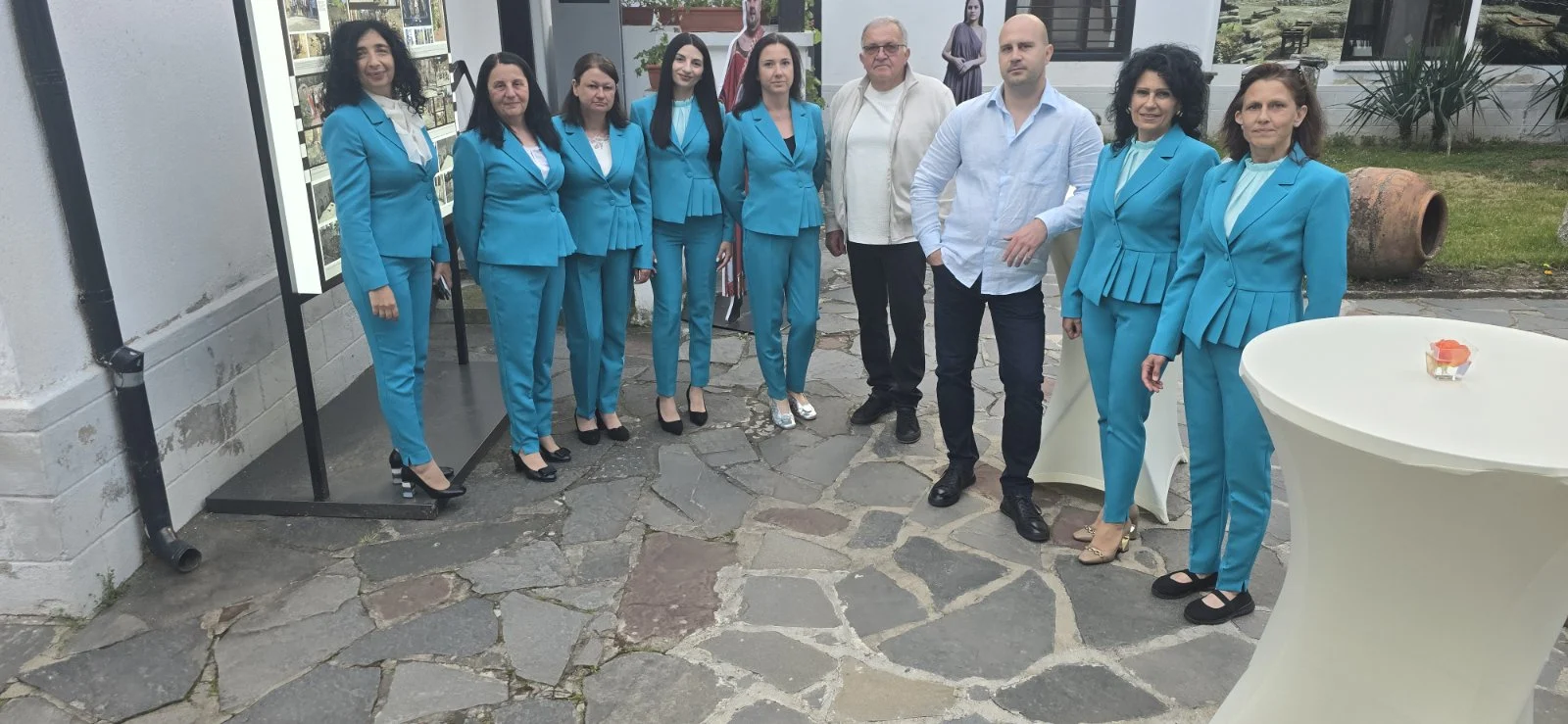
The team at the Hisarya Archaeological Museum cares for the reserve. Research, documentation, conservation and the interpretation of finds connect the specialists’ work with visitors’ curiosity. The museum’s displays help place the surviving structures in their historical context.
Discover more of Diocletianopolis